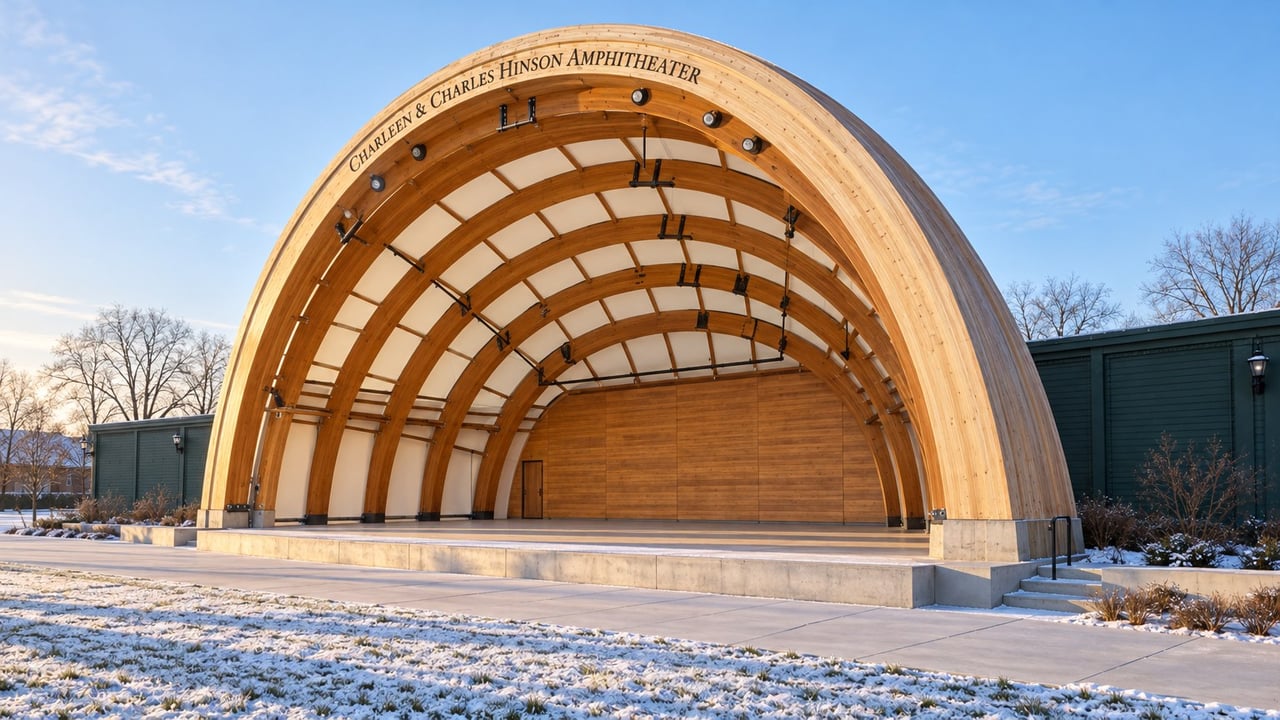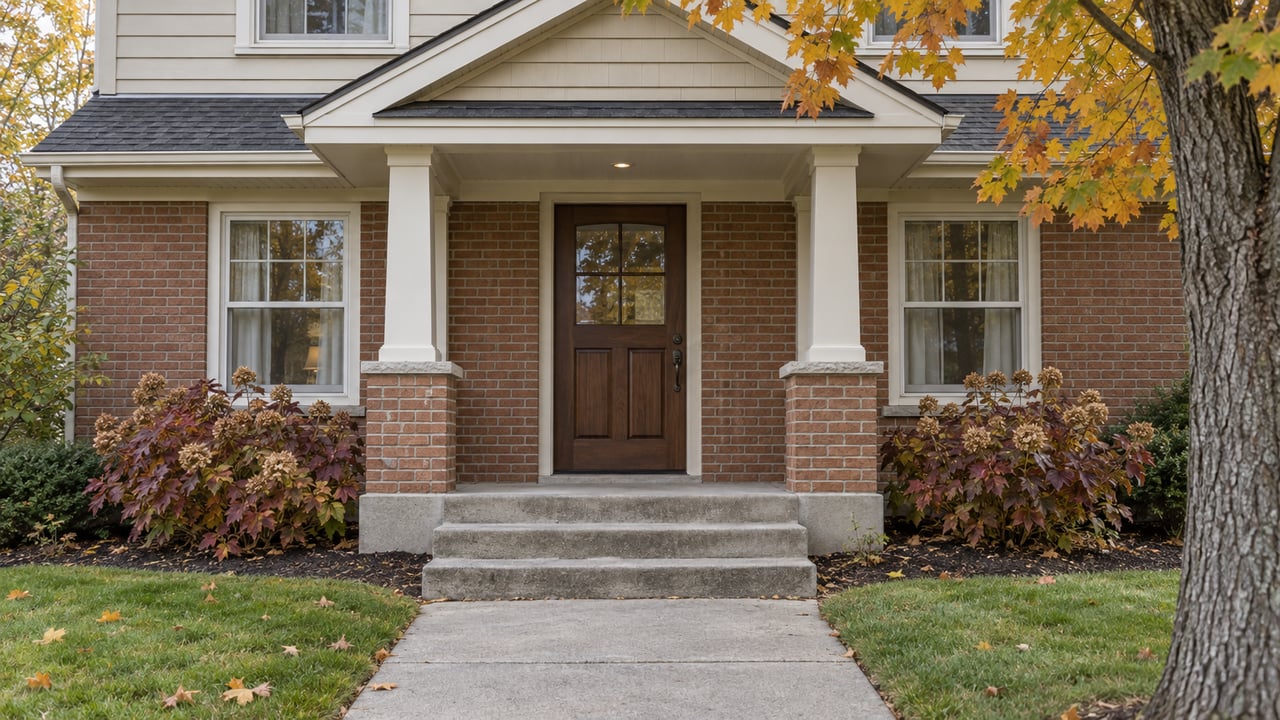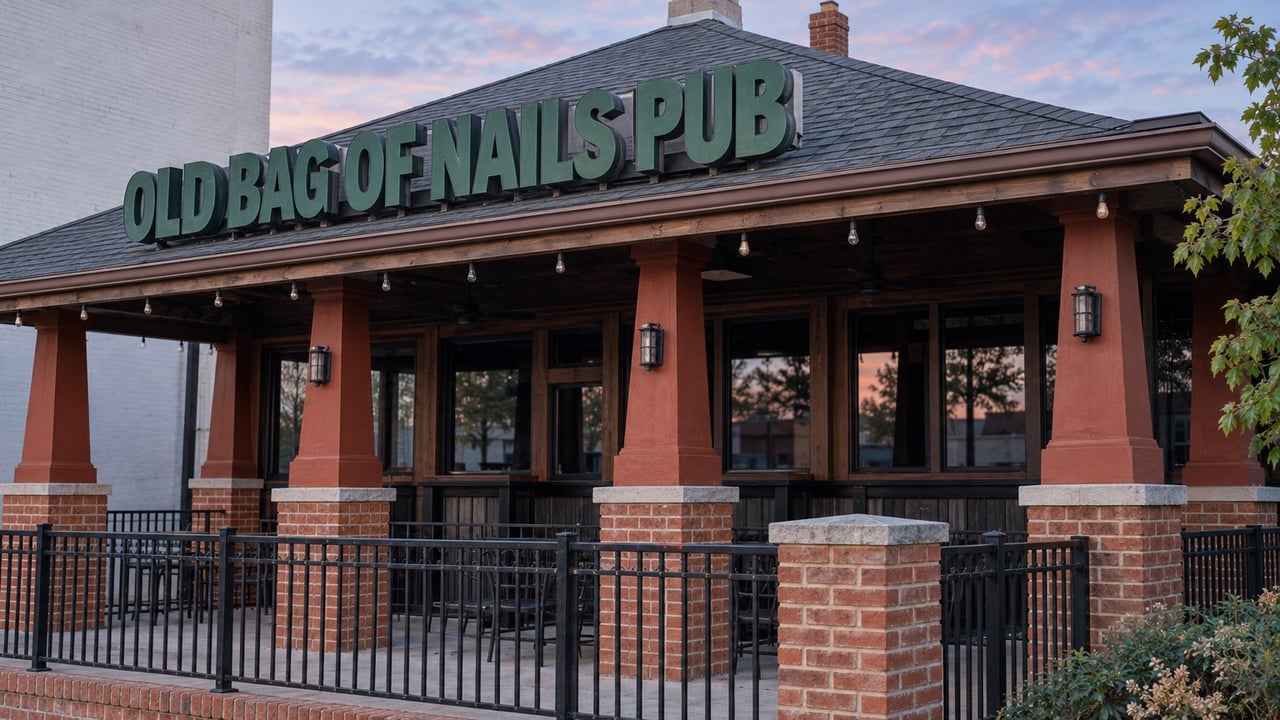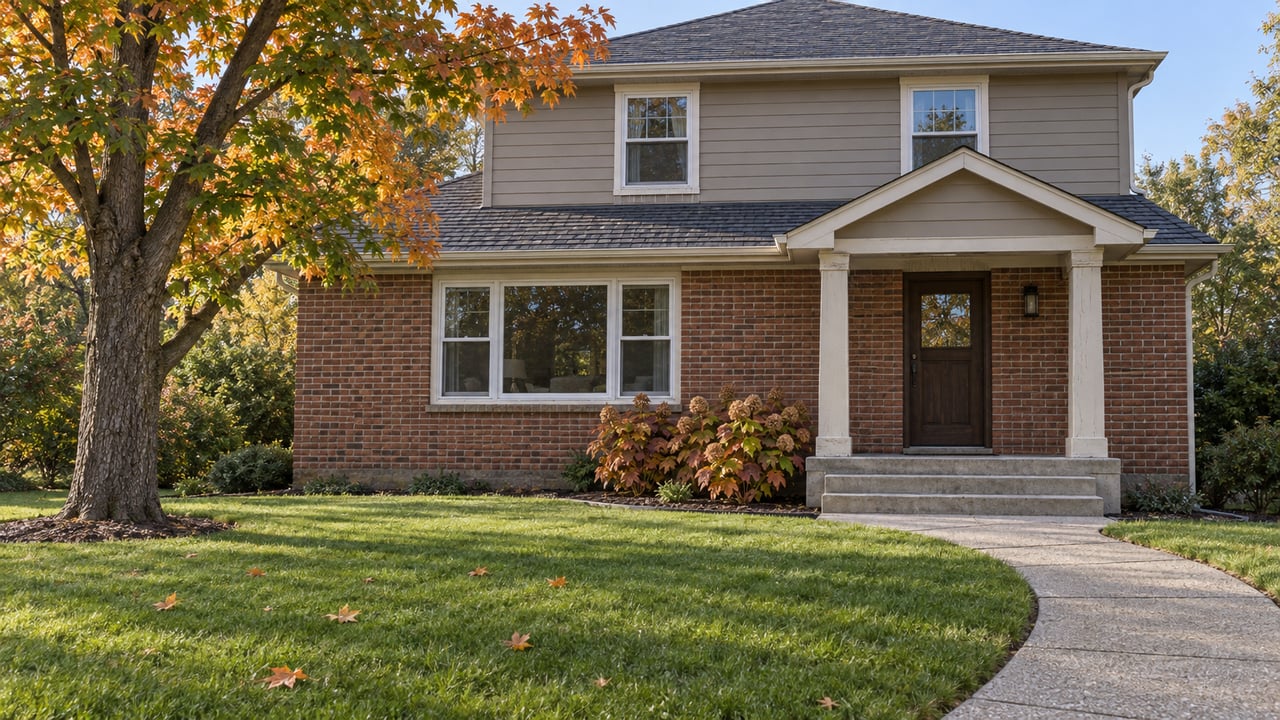
Climb the stairs inside the Old Johnstown Courthouse and you land in a room built for a job that no longer exists. The ground floor did the legal work. The second floor was the opera house, a 325-seat hall that once brought traveling performances to a farming town set aside as Revolutionary War land grants. Ohio has five of these rooms left standing. Johnstown has one of them, and it's busier now than the courtroom below it ever was.
That's the part worth sitting with. A courtroom exists to resolve one kind of dispute, on a schedule set by dockets and continuances. The room upstairs never had that constraint, and today it fills a different role entirely: it's where the town marks its milestones. Weddings book it. Graduating classes use it. Estate auctions run through it. Every winter it hosts the town's "I'll Be Home for Christmas" gathering and tree lighting, the kind of event that turns a courthouse lawn into the one place everyone in a small city shows up on the same night. A courtroom processes cases one at a time. This room processes an entire town's calendar.
A Building That Outlasted Its Original Job
The courthouse itself sits inside a downtown that's mostly still standing from its original construction. Johnstown was laid out in 1813 on land set aside for veterans of the Revolutionary War, and enough of that early building stock survived that several structures along Main Street carry National Register of Historic Places status. The bell tower over downtown isn't decorative context. It's the same signal it's been for two centuries: the courthouse is still the anchor, even after its main function moved elsewhere.
What's unusual is that the building didn't get repurposed into something else entirely, the way a lot of small-town civic buildings do once their original use expires. It kept doing civic work. It just moved that work upstairs, into the one room in the building that was never really about law in the first place. An opera house was always meant to hold a crowd for something the whole town cared about. It turns out that's a harder job to make obsolete than a courtroom.
What the Room Actually Does All Year
Strip away the history and look at the room's working calendar, and a pattern shows up that a courthouse never had:
- Weddings, which need a large room with character and don't need government business hours
- Graduation ceremonies, which need the same thing on a tighter annual schedule
- Estate and property auctions, which need a neutral public venue with real capacity
- The annual "I'll Be Home for Christmas" event and tree lighting, which needs the whole town in one place at once
None of those are legal proceedings. All of them are the events a town actually organizes its year around. A courtroom's docket is driven by whoever has a dispute that week. This room's calendar is driven by whoever in Johnstown is getting married, graduating, settling an estate, or showing up for the one night a year when the courthouse lawn turns into the community's front yard. That's a fuller use of the space than the building's original charter ever asked for.
The Room Isn't Alone in Doing This Job
The courthouse isn't the only structure in Johnstown carrying more community weight than its original purpose suggests. A few doors down Main Street, Leonard's Coffee Roasting Co. functions less like a coffee shop and more like the block's default meeting spot, the place locals end up crossing paths on an ordinary morning. Alley Art Studios, run by Johnstown native Scott Ashbrook, offers children's art classes. Ashbrook has kept the business running for thirteen years on word of mouth alone. Homes.com quotes Ashbrook: "It's a small-town atmosphere." That's not a marketing line. It illustrates how local spaces and businesses can take on roles beyond their original purpose.
The courthouse's opera house is the largest version of that same pattern. Nobody built a 325-seat room in 1800s Johnstown expecting it to host wedding receptions two centuries later. It just turned out to be the room the town had, and the town kept using it.
The Other Public Room Is Outdoors
Johnstown's other unofficial civic space isn't a building at all. The TJ Evans Bike Path starts its western trailhead in Johnstown and runs 14.3 miles to Newark, and along the way it passes the excavation site of ancient mastodon remains, a detail that turns a routine paved trail into something with actual local texture. Bigelow Park, which wraps around the Monroe Township Hall, gives the same function in miniature: a green space built for meeting outside local shops rather than driving somewhere else to do it.
The Johnstown Chamber's community calendar carries a companion event worth noting here too: the Mastodon Stampede Run & Walk Club's 5K, a free event organized with local health experts and hospital providers rather than a race-timing company. It's a small detail, but it fits the same shape as everything else in this piece. Johnstown's public infrastructure, whether it's a trail, a park, or a 200-year-old room upstairs from a courthouse, keeps getting used for more than its original brief. The trail is transportation infrastructure that became a running club's namesake event. The park is a township hall's landscaping that became a gathering spot. The opera house is a performance venue that became the town's default room for its biggest personal milestones.
None of this happened by ordinance. Nobody drafted a comprehensive plan that assigned the old opera house its wedding-and-Christmas-tree duties. The room simply had the capacity and the character a growing town needed, and Johnstown kept walking up those stairs.
If you're weighing what a Main Street address in a town like this actually offers day to day, the honest answer isn't the restaurant turnover or the newest storefront. It's whether a place has kept the kind of public rooms, indoor and outdoor, that a community organizes its year around without anyone having to build them from scratch.
If you're thinking through what living near a downtown like Johnstown's would actually mean for your routine, or you want a straight read on how a specific block or property fits into that picture, Sharon Staub knows this stretch of Licking County well enough to give you a direct answer. Let's Connect.